Find carbon coating dc sputter coater for Lab, School, and Research
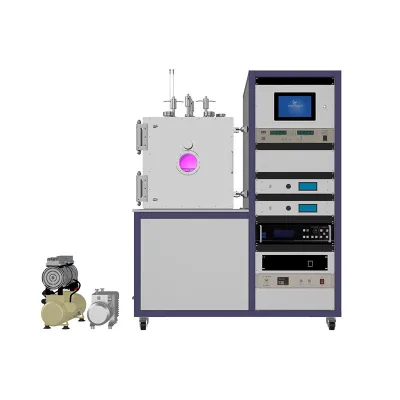
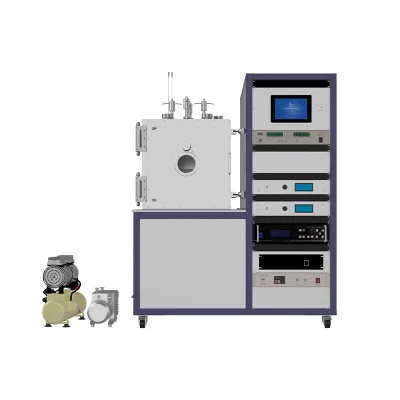
Source 29 carbon coating dc sputter coater units from verified Chinese manufacturers. Buyers can compare models with varying chamber sizes, power ratings, and vacuum pump configurations for laboratory and educational applications.
Key considerations
Products List




Comprehensive Sourcing Guide
Strategic Sourcing Guide for Carbon Coating DC Sputter Coaters
Understanding Core Technical Specifications and System Architecture
When sourcing a carbon coating DC sputter coater, buyers must first establish a clear understanding of the fundamental technical architecture that defines performance. The core keyword implies a specific configuration where Direct Current (DC) power is utilized to sputter carbon targets onto substrates. This process relies on a plasma environment generated within a vacuum chamber. The supplied product data indicates that the chamber material is a critical differentiator, with options ranging from High Purity Quartz to Stainless Steel (SS304). Quartz chambers are often preferred for specific optical applications due to their transparency and purity, while SS304 offers robust mechanical durability and ease of cleaning for general laboratory use.
The physical dimensions of the system are equally vital for integration into existing laboratory workflows. Observed specifications reveal chamber sizes varying significantly, such as 180210mm, 213307mm, and larger configurations like 325*500mm. These dimensions directly dictate the maximum substrate size the machine can accommodate. For instance, systems designed for 100mm substrates differ structurally from those capable of handling 150mm samples. The target configuration is another key specification; data points show target quantities of 1 or 3 units, typically sized at 2 inches. The power supply requirements also vary, with observed inputs ranging from AC 220V to specific DC power ratings of 500W or 1200V. Buyers must verify that the facility's electrical infrastructure can support the specific voltage and amperage requirements of the selected model, as mismatched power supplies can lead to operational failure or safety hazards.
Compliance Verification and Certification Standards
In the realm of industrial and laboratory equipment, compliance is not merely a formality but a prerequisite for safe operation and international trade. The provided data explicitly lists CE certification as a high-confidence attribute for the products in question. This certification indicates that the equipment meets the essential health, safety, and environmental protection requirements for products sold within the European Economic Area. However, buyers should not assume that all listed units automatically possess this status without verification. The presence of the CE mark on a product page suggests compliance, but the buyer must request the specific Declaration of Conformity and technical construction files to validate the claim.
Beyond the CE mark, other standards may apply depending on the intended market and application. The product origin is listed as China, which is a major manufacturing hub for this equipment. While this offers competitive pricing, it necessitates a rigorous review of the manufacturer's quality management systems. Buyers should verify if the supplier adheres to ISO 9001 standards for quality management, although this specific standard is not explicitly confirmed in the provided text. Furthermore, the packaging standard is noted as a fumigated wooden box, which is a requirement for international shipping to prevent the spread of pests. This detail is crucial for logistics planning, ensuring that the equipment can clear customs without delays. Buyers must also check for local safety certifications relevant to their specific country, such as UL or ETL in North America, as the CE mark alone may not suffice for all jurisdictions.
Cost Drivers and Pricing Structure Analysis
The pricing landscape for DC sputter coaters is influenced by a complex array of factors, including chamber material, vacuum system complexity, and power specifications. The observed price range for these systems spans from $999 to $300,000, a vast disparity that reflects the difference between basic desktop units and high-end, fully automated systems. The lower end of the spectrum likely corresponds to entry-level models with simpler vacuum pumps and smaller chamber volumes, suitable for educational or basic research purposes. Conversely, the higher price points are associated with advanced configurations featuring turbo-molecular pumps, larger substrate capacities, and sophisticated control systems.
Several specific components drive the cost upward. The vacuum pump system is a primary cost driver; systems equipped with a combination of a Rotary Vane Pump (e.g., 1.1L/S) and a Turbo-Molecular Pump (e.g., 600L/S) command a premium over those relying solely on mechanical pumps. The chamber material also impacts pricing, with High Purity Quartz often being more expensive than standard stainless steel due to material costs and manufacturing precision. Additionally, the power supply configuration plays a role; systems offering adjustable RF power (e.g., 300W) in addition to DC power (e.g., 500W) provide greater versatility but come at a higher cost. Buyers should analyze the total cost of ownership, including energy consumption and maintenance, rather than focusing solely on the initial purchase price. The minimum order quantity (MOQ) is observed to be 1 unit, which facilitates procurement for small laboratories, but bulk purchasing may offer negotiation leverage for larger institutions.
Typical Applications and Operational Versatility
The versatility of carbon coating DC sputter coaters makes them indispensable across various scientific and industrial sectors. The primary application is the deposition of thin carbon films for electron microscopy, where carbon coatings enhance sample conductivity and reduce charging effects. The data highlights applications in "Lab" and "School" settings, indicating a strong presence in academic research and educational environments. These institutions often require systems that are compact, easy to operate, and capable of handling small sample sizes, such as the 138mm diameter samples noted in the specifications.
Beyond microscopy, these coaters are utilized in materials science research for developing thin-film devices, solar cells, and optical coatings. The ability to adjust the substrate heating temperature up to 500°C allows for the optimization of film adhesion and crystallinity, which is critical for high-performance applications. The rotation speed, adjustable from 1 to 20 rpm, ensures uniform coating thickness across the substrate surface, a requirement for consistent experimental results. The "Customized" attribute suggests that suppliers can tailor systems to specific research needs, such as integrating unique gas injection ports or specialized substrate holders. For industrial applications, the robustness of the SS304 chamber and the high vacuum capabilities make these systems suitable for quality control and prototype development in manufacturing environments.
Supplier Evaluation and Technical Due Diligence
Selecting the right supplier requires a thorough evaluation of their technical capabilities and support infrastructure. Since the product origin is China, buyers should prioritize suppliers with a proven track record of exporting high-quality vacuum equipment. The evaluation process should begin with a review of the product model numbers, such as TN-PLZ180-III-DC-Q or TN-MSZ254-I-DC-SS, to ensure the specific configuration matches the buyer's requirements. Buyers must verify the authenticity of the specifications, particularly regarding the vacuum pump flow rates and power ratings, as these are critical for performance.
Supplier reliability is often indicated by the clarity and detail of their product documentation. A reputable supplier will provide comprehensive manuals, wiring diagrams, and safety guidelines. The presence of a "Desktop" structure in the product attributes suggests a focus on space-efficient designs, which is beneficial for laboratories with limited floor space. Buyers should also inquire about the availability of spare parts, such as targets, pumps, and seals, to ensure long-term operational continuity. The standard packaging of a fumigated wooden box indicates a commitment to safe shipping, but buyers should confirm if the supplier offers additional insurance or specialized handling for delicate components. Finally, the supplier's response time to technical inquiries and their willingness to provide pre-sales demonstrations are strong indicators of their commitment to customer satisfaction.
Quality Control and Long-Term Procurement Considerations
Ensuring the quality of the sputter coater involves a multi-layered approach to quality control, starting from the manufacturing stage through to final delivery. The use of high-purity materials, such as High Purity Quartz and SS304, is a baseline requirement that must be verified. Buyers should request material certificates to confirm the purity levels and mechanical properties of the chamber components. The vacuum measurement system, typically utilizing a Resistance Gauge, must be calibrated and accurate to ensure the system can achieve the necessary vacuum levels for effective sputtering.
Long-term procurement considerations extend beyond the initial purchase to include maintenance, training, and lifecycle management. The heating temperature limit of 500°C and the adjustable rotation speed are features that require regular calibration to maintain accuracy. Buyers should establish a maintenance schedule that includes checking the vacuum pump oil, replacing worn seals, and calibrating the power supply. The availability of technical support is crucial; a supplier that offers remote troubleshooting or on-site service can significantly reduce downtime. Additionally, buyers should consider the scalability of the system; as research needs evolve, the ability to upgrade components or expand the system's capabilities can extend the equipment's useful life. By focusing on these long-term factors, buyers can ensure a sustainable investment in their laboratory infrastructure.
Comparative Analysis of System Configurations
To aid in decision-making, it is helpful to compare the different configurations available in the market based on the provided data. The following table outlines the key differences between common models, highlighting the trade-offs between performance, size, and application suitability.
| Feature | Model A (Quartz Chamber) | Model B (SS304 Chamber) | Model C (High Capacity) |
|---|---|---|---|
| Chamber Material | High Purity Quartz | SS304 | Stainless Steel |
| Chamber Size | 180*210mm | 213*307mm | 325*500mm |
| Substrate Size | 100mm | 150mm | 150mm |
| Target Qty | 3 (2-Inch) | 1 (2-Inch) | 1 (2-Inch) |
| Vacuum Pump | Rotary Vane + Turbo | Rotary Vane + Turbo | Rotary Vane + Turbo |
| Power Supply | DC 500W / 1200V | DC 500W | DC 500W / RF 300W |
| Heating Temp | Max 500°C | Max 500°C | Max 500°C |
| Ideal Application | Optical Research | General Lab | Advanced Materials |
This comparison illustrates that while the heating and power capabilities are often similar, the chamber material and size are the primary differentiators. The Quartz chamber model is ideal for applications requiring optical transparency, while the SS304 models offer greater durability for general use. The high-capacity model supports larger substrates and offers RF power options, making it suitable for more complex material synthesis tasks. Buyers should select the configuration that best aligns with their specific research goals and laboratory constraints.
FAQs
What certification does the carbon coating dc sputter coater have?
The equipment holds CE certification, indicating compliance with European safety standards. Buyers should verify the specific Declaration of Conformity for their jurisdiction before purchase.
Which chamber materials are available for these sputter coaters?
Chambers are constructed from either High Purity Quartz or Stainless Steel SS304. Quartz is preferred for optical applications, while SS304 offers durability for general laboratory use.
How large a substrate can the machine accommodate?
The system supports substrate sizes up to 150mm depending on the specific model configuration. Smaller units are available for 100mm samples, fitting desktop laboratory spaces.
Can the system operate with both DC and RF power?
Yes, certain models support DC power up to 500W and RF power up to 300W. This dual capability allows for versatile coating applications across different material types.
What is the maximum substrate heating temperature?
The heating system can reach a maximum temperature of 500 degrees Celsius. This feature helps optimize film adhesion and crystallinity during the deposition process.
How is the product packed for international shipping?
Products are shipped in fumigated wooden boxes to meet international pest control standards. This packaging ensures safe transport and facilitates smooth customs clearance for global buyers.